Анлайн версія аўдыягіда "Лідскі замак"
Макет “Будаўніцтва замка ў Лідзе”
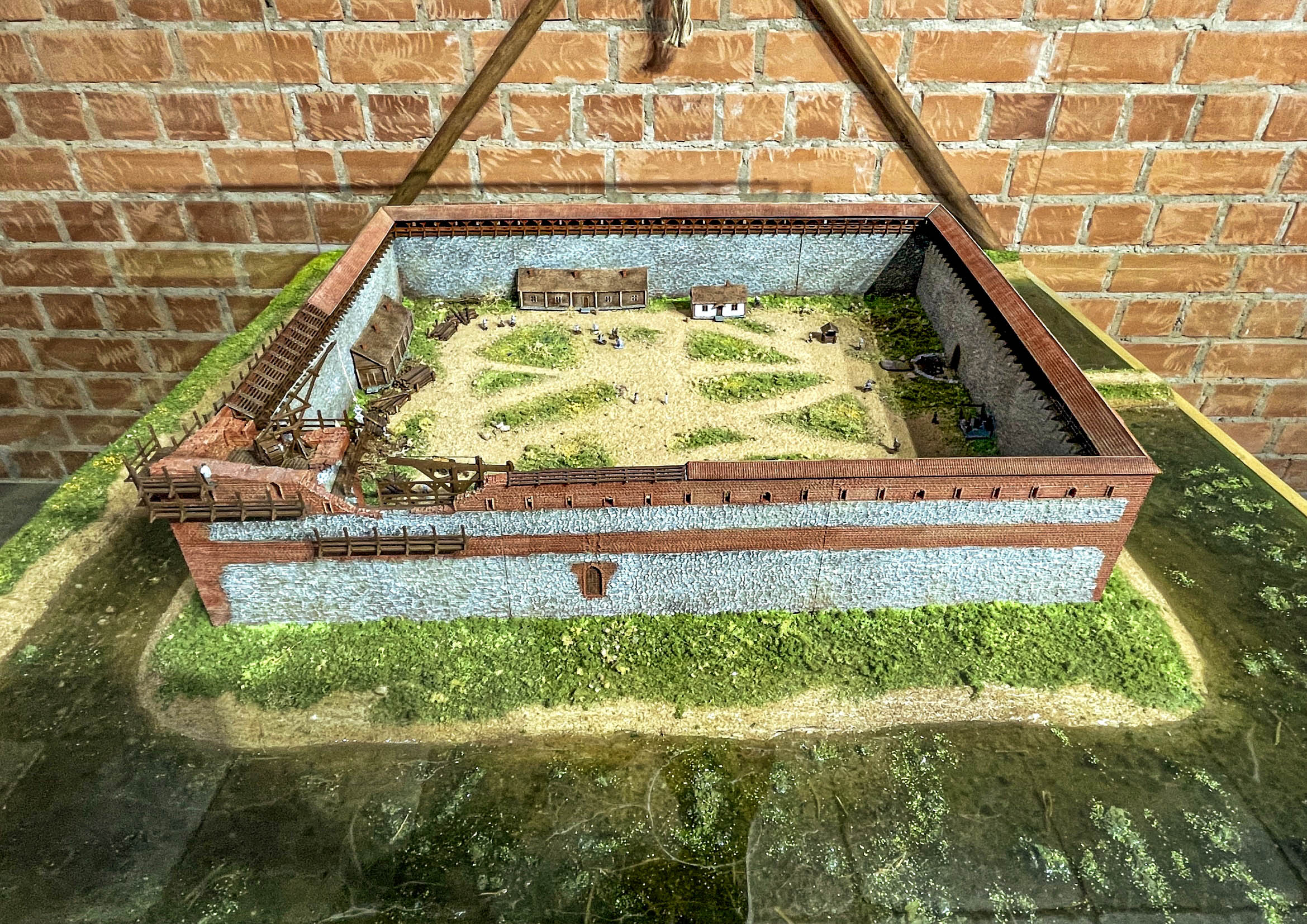
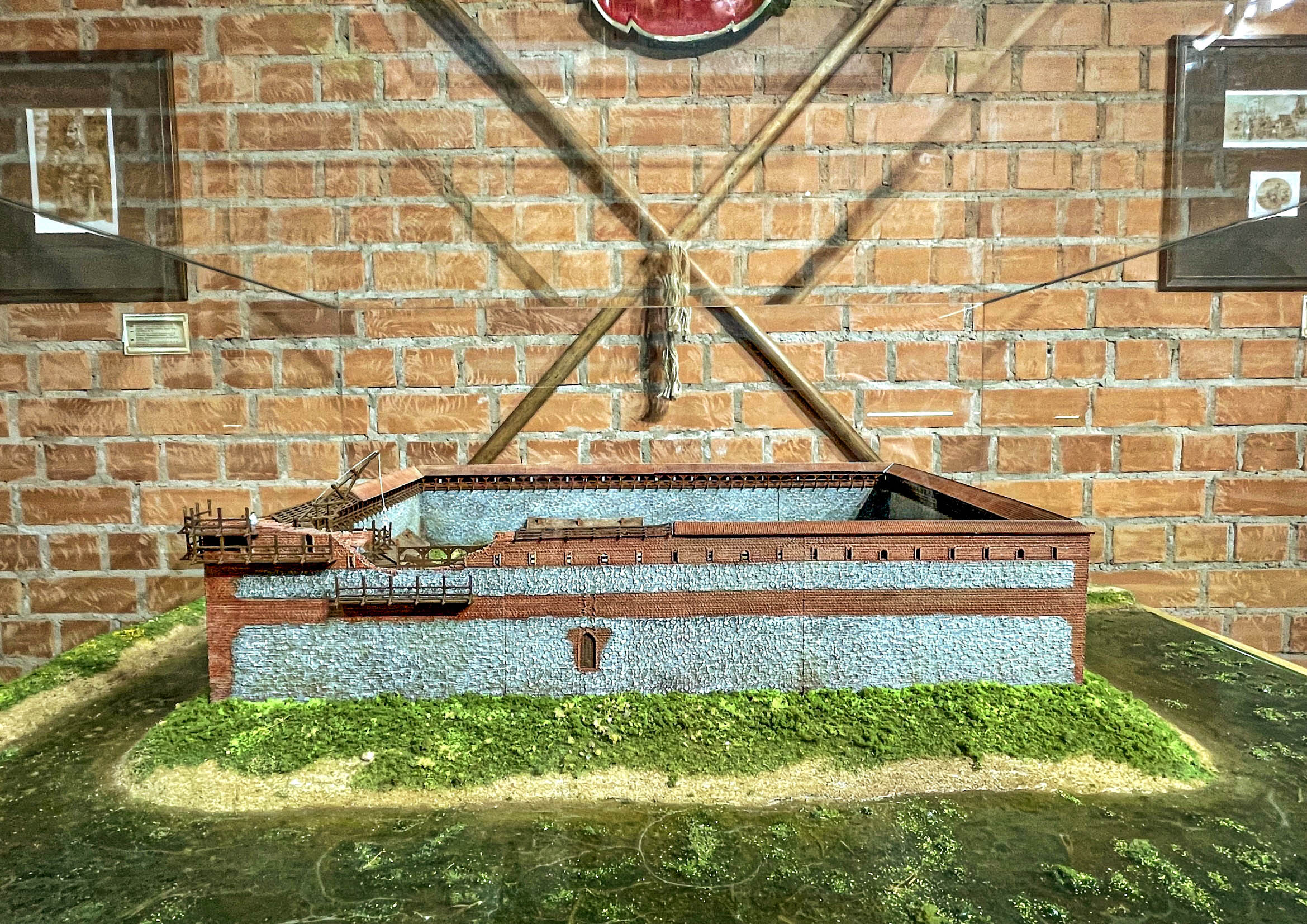
Тут прадстаўлены Лідскі замак на стадыі завяршэння будаўніцтва, з адной вежай і двума ўваходамі ў паўднёвай і ўсходняй сценах. Замак быў пастаўлены на пясчаным узгорку, акружаным балоцістымі берагамі рэк Лідзея і Каменка. Будаўніцтва Лідскага замка, аднаго з самых вялікіх мураваных замкаў на тэрыторыі сучаснай Беларусі, прыпадае на 30-я гады XIV стагоддзя.
Скарыстаўшыся часовым замірэннем з крыжакамі, вясной 1323 года Гедымін разаслаў у ганзейскія (паўночна-нямецкія) гарады лісты з запрашэннем на працу розных майстроў, у тым ліку і муляроў. Ёсць меркаванне, што ганзейскія будаўнікі прынялі непасрэдны ўдзел ва ўзвядзенні Лідскага замка. Мясцовыя рамеснікі сумесна з запрошанымі замежнікамі, узяўшы за аснову рыцарскі кастэль, перапрацавалі і прыстасавалі яго да мясцовых прыродных і абарончых умоў.
На месцы будоўлі ўзводзіліся драўляныя рыштаванні. Пры гэтым гарызантальныя бэлькі ўстаўлялі ў зробленыя ў сценах адтуліны. Зверху ўпоперак іх клалі дошкі. Квадратныя заглыбленні ад рыштаванняў і сёння можна ўбачыць на паўднёвай сцяне замка, хоць пасля заканчэння будаўніцтва нішы запаўнялі вапняком, але з часам ён адвальваўся.
Пабудавалі замак з палявога каменя і цэглы. Як мяркуецца, будаўнічыя работы вяліся ад 5 да 7 гадоў.
Скарыстаўшыся часовым замірэннем з крыжакамі, вясной 1323 года Гедымін разаслаў у ганзейскія (паўночна-нямецкія) гарады лісты з запрашэннем на працу розных майстроў, у тым ліку і муляроў. Ёсць меркаванне, што ганзейскія будаўнікі прынялі непасрэдны ўдзел ва ўзвядзенні Лідскага замка. Мясцовыя рамеснікі сумесна з запрошанымі замежнікамі, узяўшы за аснову рыцарскі кастэль, перапрацавалі і прыстасавалі яго да мясцовых прыродных і абарончых умоў.
На месцы будоўлі ўзводзіліся драўляныя рыштаванні. Пры гэтым гарызантальныя бэлькі ўстаўлялі ў зробленыя ў сценах адтуліны. Зверху ўпоперак іх клалі дошкі. Квадратныя заглыбленні ад рыштаванняў і сёння можна ўбачыць на паўднёвай сцяне замка, хоць пасля заканчэння будаўніцтва нішы запаўнялі вапняком, але з часам ён адвальваўся.
Пабудавалі замак з палявога каменя і цэглы. Як мяркуецца, будаўнічыя работы вяліся ад 5 да 7 гадоў.